

A skilled textile artist and teacher, Susan Hill learned embroidery at a young age and went on to develop and practice an extensive vocabulary of embroidery stitches and combinations, teach in museum and community settings, and co-developed the needlework of Judy Chicago’s internationally known installation, The Dinner Party. Susan, who teaches embroidery classes at our shop, took a few moments this week to speak with us about her love of embroidery, feudal houses, Maine, and a few things in between. Enjoy.
How did you become interested in embroidery?
I was a lucky little girl. My grandmother, who was the oldest of 12 children and had five sisters, was a really good cook; she and all my aunts embroidered and hooked rugs and sewed clothes. My grandmother taught me embroidery. I don’t even think she gave it a second thought—children are given skills. I was interested because I had a family where it was done all around me, and I found I loved it. My sister was exposed to the same experiences, but it wasn’t in her nature. She’d rather be out playing. I remember having tiny projects. I was between five and 10 years old. I simply never stopped; I’ve always been engaged in creating something.
What do you enjoy most about the craft?
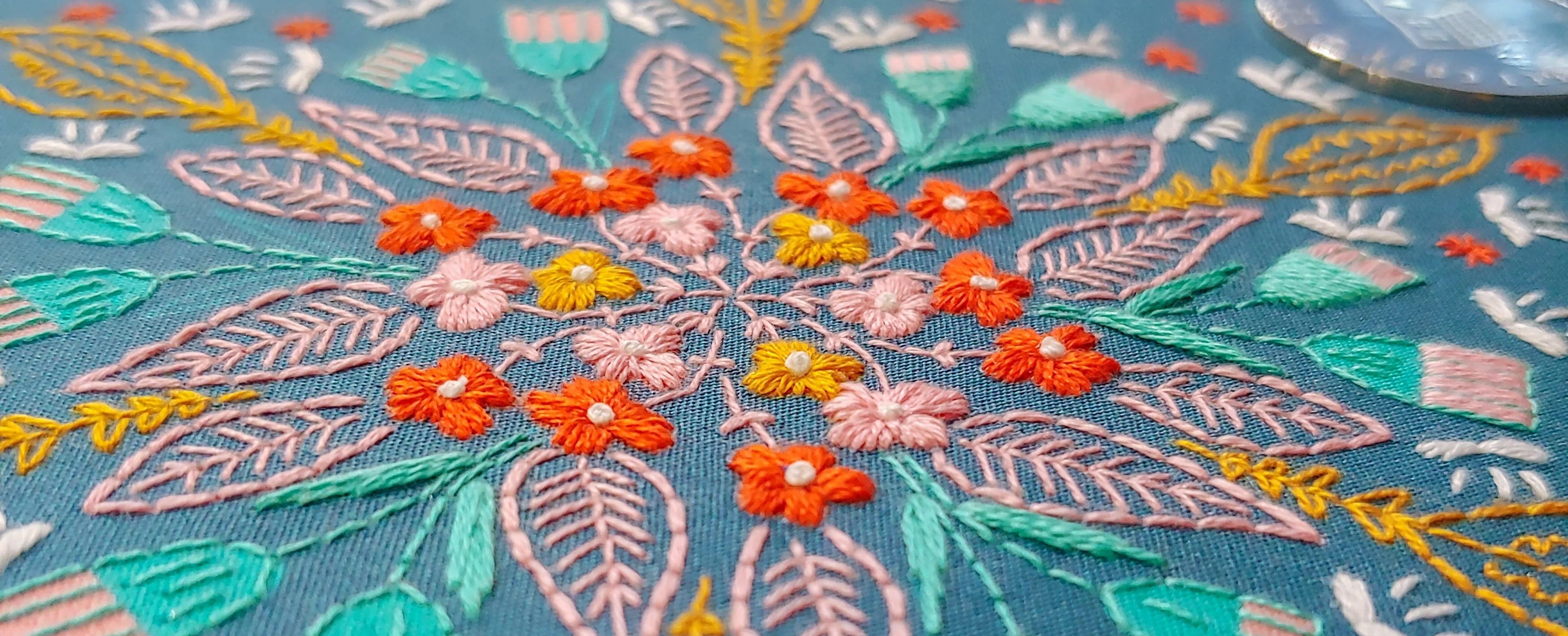
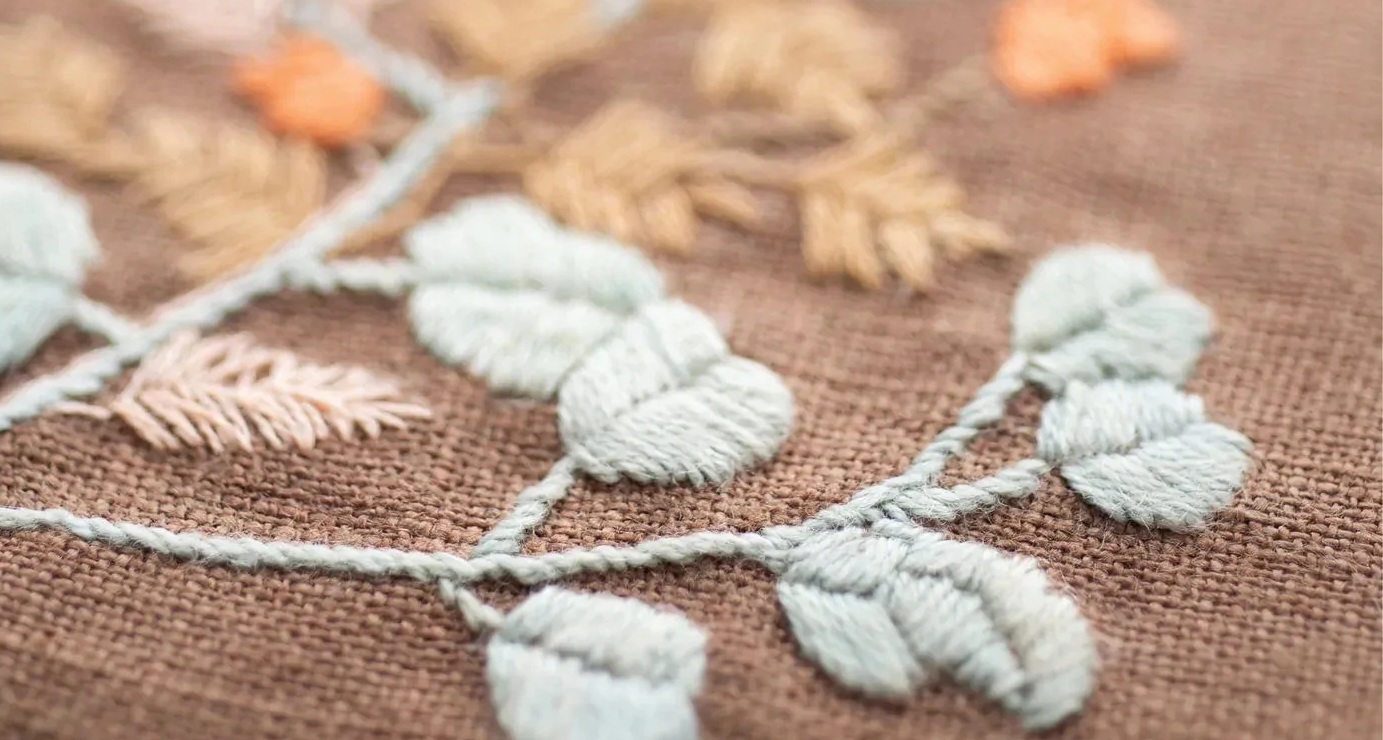
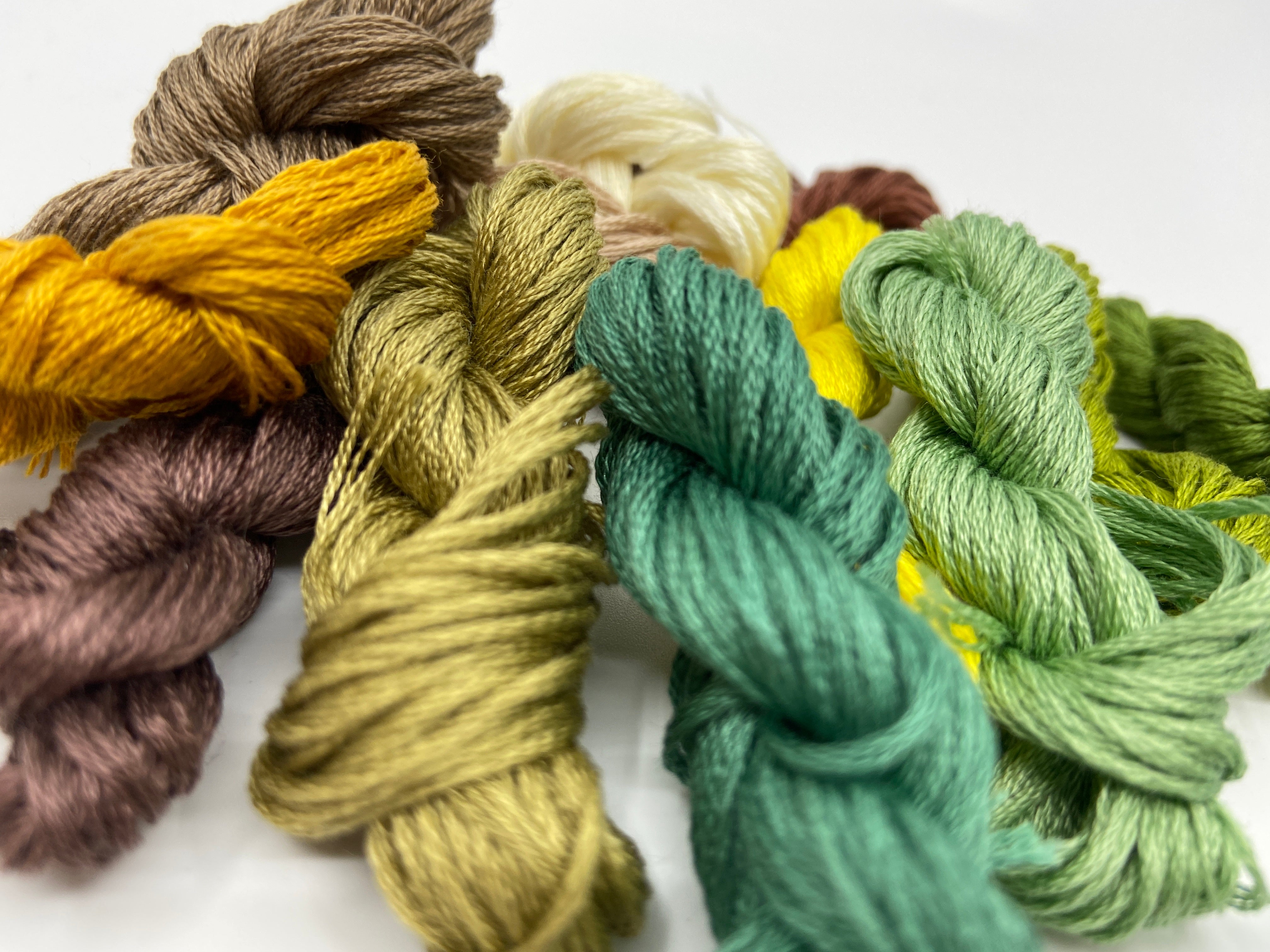
Embroidery and all those allied meditative activities—knitting, collage, sewing—I love the feeling of the fabric in my hands. I love the threads. I love the variety of textures you can lay down. I love watching something grow. It is a relationship between you and the materials, and the materials eventually begin to dictate what comes next. That dialogue with the work is incredibly intriguing. The more I know about the history of embroidery—sewing is actually kind of practical—but embroidery, beading, braidwork, they aren’t essential, and yet they have been done from the earliest of human times. I think they’ve been done for the beauty of it. You invest in the beauty. Being one more person in that line that comes from the earliest of times that’s contributing in that way—I love that.
Why do you enjoy teaching embroidery?
I started teaching when I was in California, before The Dinner Party in 1975. In that state, there are a lot of community-based programs where artists can work in community centers and teach. You get a stipend for it. It’s a great thing. I started teaching then. I loved being able to share the skill I had with others and seeing their delight in it and what they were interested in doing.
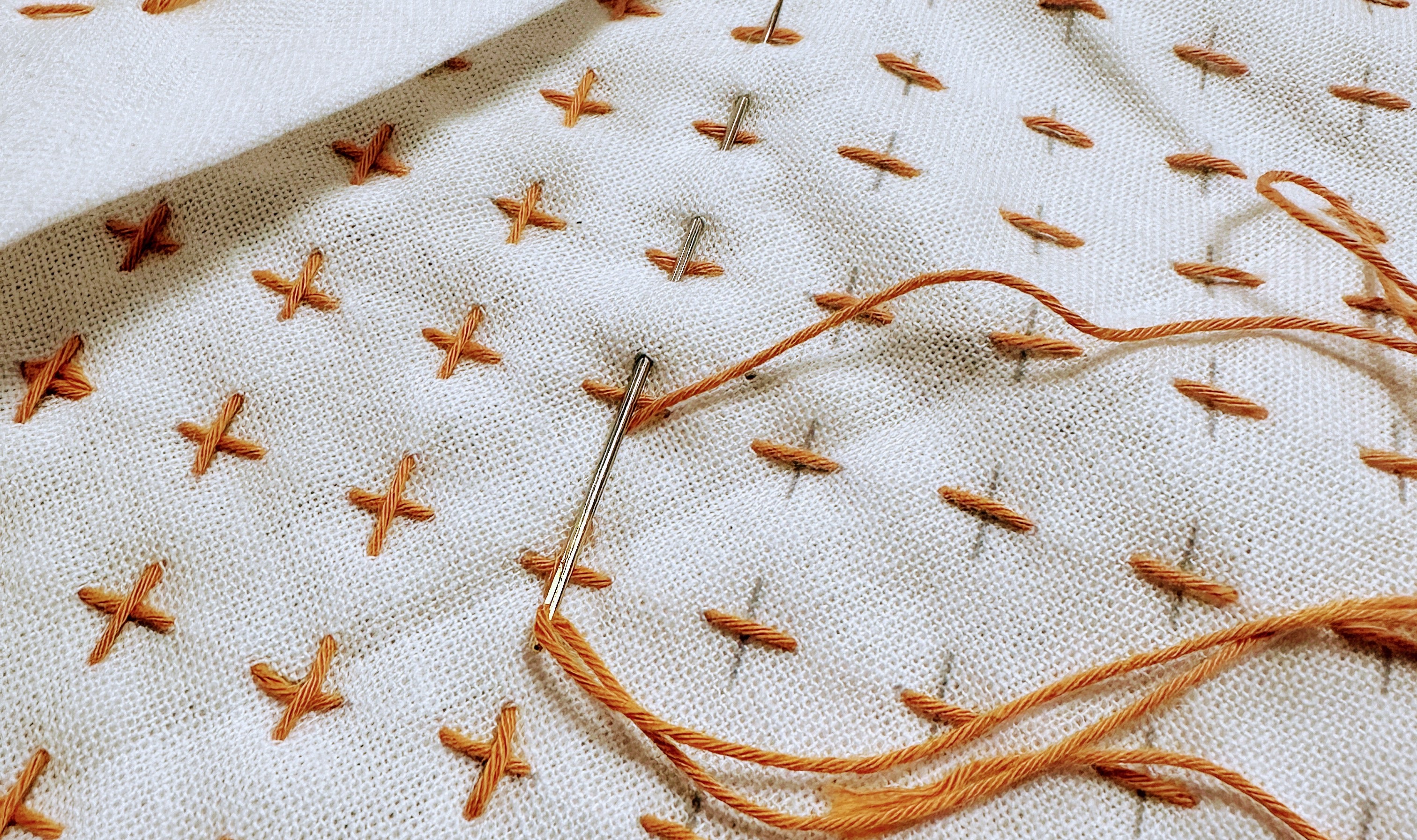
After The Dinner Party, I was asked to teach very often because of the skills I developed in textiles and embroidery and because of the special group environment at The Dinner Party. I really enjoy being in a community setting way more than being by myself for hours at a time in a studio. I like the collective energy of the group. Embroidery is much better passed on from person to person, rather than learning from a book.
What do you learn from teaching?
I’m intrigued with each person’s imagination. One of the best things about teaching is just being quiet and seeing when people learn how to do a particular stitch, what they do with it. Not only do people do their own creative work fairly quickly, but they start to bring in pieces of textiles that have been in their families or special embroidery pieces, and it’s like being back in a museum again. The biggest thing is to keep quiet, and you learn all the time.
You lived in LA for many years. Why move to Maine?
I grew up in New England. When I graduated from college, I wanted to experience the city. I wanted to be an artist, so I went to New York City. After a while, I was curious about California and went to Los Angeles. I kept thinking, I’ll go back. I’m not here forever. But you get engaged in work and you have colleagues and friends. It took years for me to disengage and come back. Maine is beautiful. I love the Atlantic Ocean. The beaches in Massachusetts are much softer, but there’s something about the rocky coast of Maine where you can smell the evergreen trees and you’re looking at these black cliffs and you can hear the sound of the waves against the cliffs—I just love it. And the sense of humor in Maine knocks me out. It’s an acquired taste, I know. I missed it enormously when I was on the west coast.
Tell us more about your needlework for Judy Chicago’s The Dinner Party and the book you co-authored, Embroidering Our Heritage.

Embroidery detail of Judy Chicago's The Dinner Party. Photo by Susan Lenz (http://artbysusanlenz.blogspot.com/).
The Dinner Party wouldn’t have embroidery in it if it weren’t for me. When Judy conceived the piece, there was no embroidery. Judy wanted to use machine embroidery to put the names of the women that were embodied in the plates on the tablecloths. Here do this, she said, and handed me a Bernina sewing machine. I sat down and worked on it, but eventually I said to her, “This machine is temperamental. There is hand-embroidery, and we could do it that way!” I took her around to some museums to see what the history of embroidery contained, and she realized what an important element that could be. It was absolutely fabulous to go back in time for each woman on the table. We did in-depth research on what would have been appropriate during her time, for fabric, embroidery stitches, and context. Then we learned the techniques and did it. We made big sample books and kept notes. All The Dinner Party archives, including the embroidery research and samples, are at Harvard in the Schlesinger Library; anybody can go look at them.
We didn’t find other projects like The Dinner Party, but what we were doing had some alliance to the way certain embroideries and tapestries were made in the feudal houses. I don’t know that The Dinner Party had precedence.
Susan is teaching embroidery skills during a six-session class on Saturdays, beginning February 4 at Fiddlehead Artisan Supply. View details and sign up soon.